
Solar Panel Maintenance: What Panels Need and What They Do Not
Good news first: solar panel maintenance is mostly about paying attention, not about scrubbing. Panels have no moving parts, and rain keeps most of them clean enough. Even so, a little care keeps production high for decades and helps you catch problems early. This guide explains what panels really need, when cleaning solar panels makes sense, how to handle snow and debris, and when to call a professional.
Last reviewed and updated: October 2, 2026. Written by Jeremy Jarvis.
Key takeaways
- Solar panels need little maintenance; monitoring production is the most useful habit.
- Rain cleans most panels; clean only when monitoring shows dirt is cutting output, and follow the manufacturer’s method.
- Never pressure wash, walk on panels or use abrasive tools, and leave roof work to trained crews.
- Inverters, batteries and wiring need occasional checks, and warranties often require approved service.
Your panel and inverter manuals and warranty terms always come first. Use this guide as a framework, and check those documents before you clean or touch any equipment.
What solar panel maintenance actually involves
Solar panels are built to sit outdoors for many years. Tempered glass protects the cells, and aluminum frames hold everything together. As a result, they need far less care than most home equipment. The main enemies of production are shade, heavy soiling and equipment faults. Monitoring catches all three.
The rest of the system needs occasional attention too. Inverters, wiring, batteries and roof mounts can develop issues over time. However, most of those checks are visual or happen during a professional inspection. You rarely need tools.
Monitoring: the most important solar panel maintenance step
Most systems include monitoring through an app, a web portal or an inverter display. It shows how much energy the system produces each day. Check it regularly, especially after storms. Then compare production with the same month last year and with the estimate your installer provided.
Weather explains most changes. Cloudy weeks and short winter days lower output, and that is normal. By contrast, a sudden drop on a clear day suggests a problem. Patterns help too. If one panel or string produces less than the others, something specific may be wrong with it. Many monitoring systems send alerts for faults, so make sure notifications are on.
Signs of a problem
Several signs point to trouble. A production drop with no weather explanation is the most common. Error messages on the inverter or in the app are another. Visible damage, such as cracked glass, loose wires, scorch marks or sagging mounts, needs attention. Similarly, new shade from a growing tree or a neighbor’s addition can quietly reduce output over time.
Inside the home, watch the inverter. Lights or codes on the display usually explain the problem. Note the code and contact your installer. Do not open inverters or electrical boxes yourself, because they can carry dangerous voltage even when the grid is off.
When cleaning solar panels makes sense
In many climates, rain does the cleaning. Dust and pollen wash away with the next storm. Therefore, many owners never clean their panels at all. However, some situations call for cleaning. Long dry seasons, heavy pollen, agricultural dust, nearby construction, sea salt and bird droppings can all build up. Flat or low-tilt panels also hold dirt longer.
Let monitoring guide you. If production drops and you can see a layer of grime, cleaning may help. If production looks normal, cleaning probably adds little. Moreover, every trip onto a roof carries a risk, so clean only when the benefit is real.
Cleaning solar panels safely
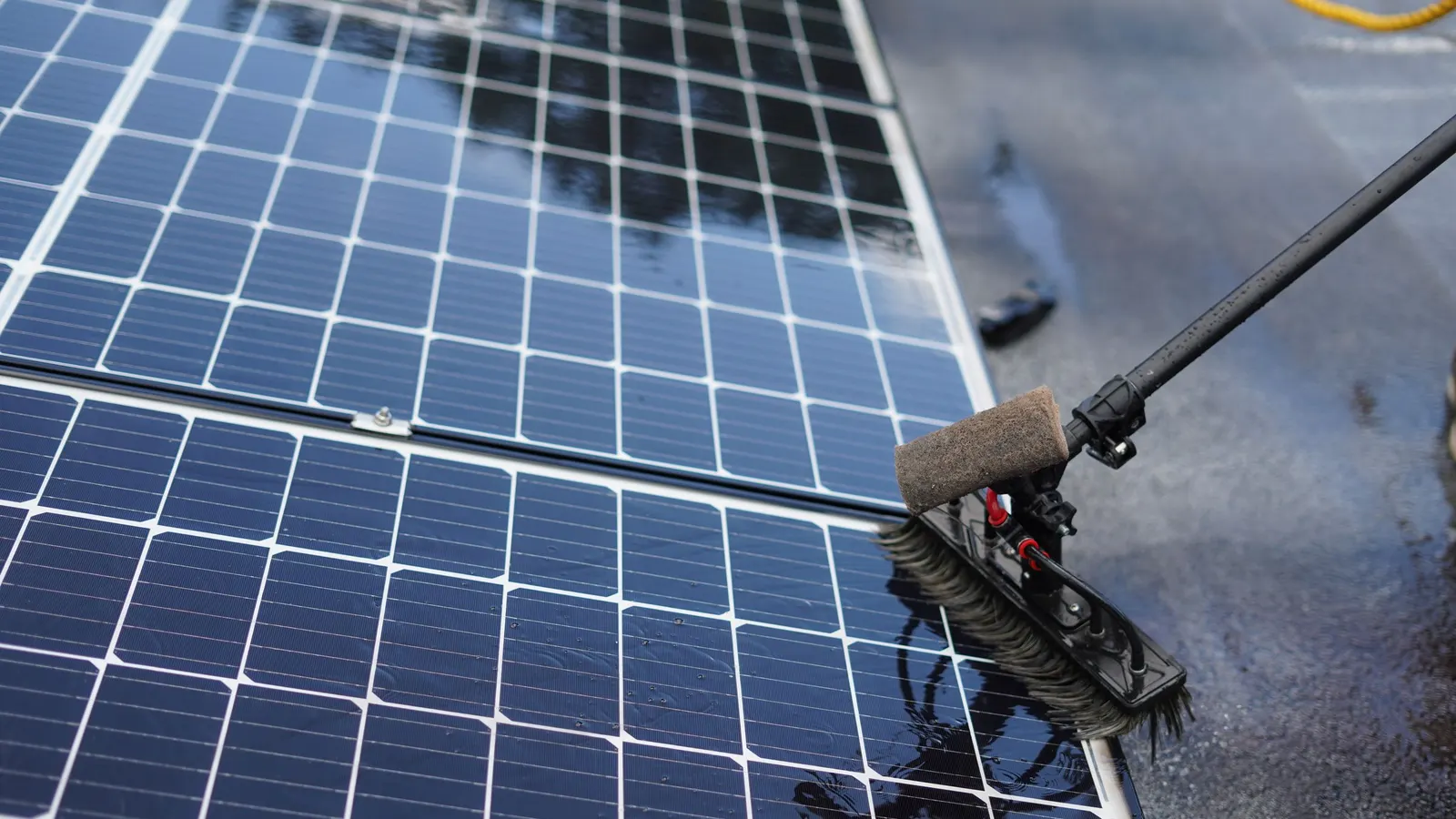
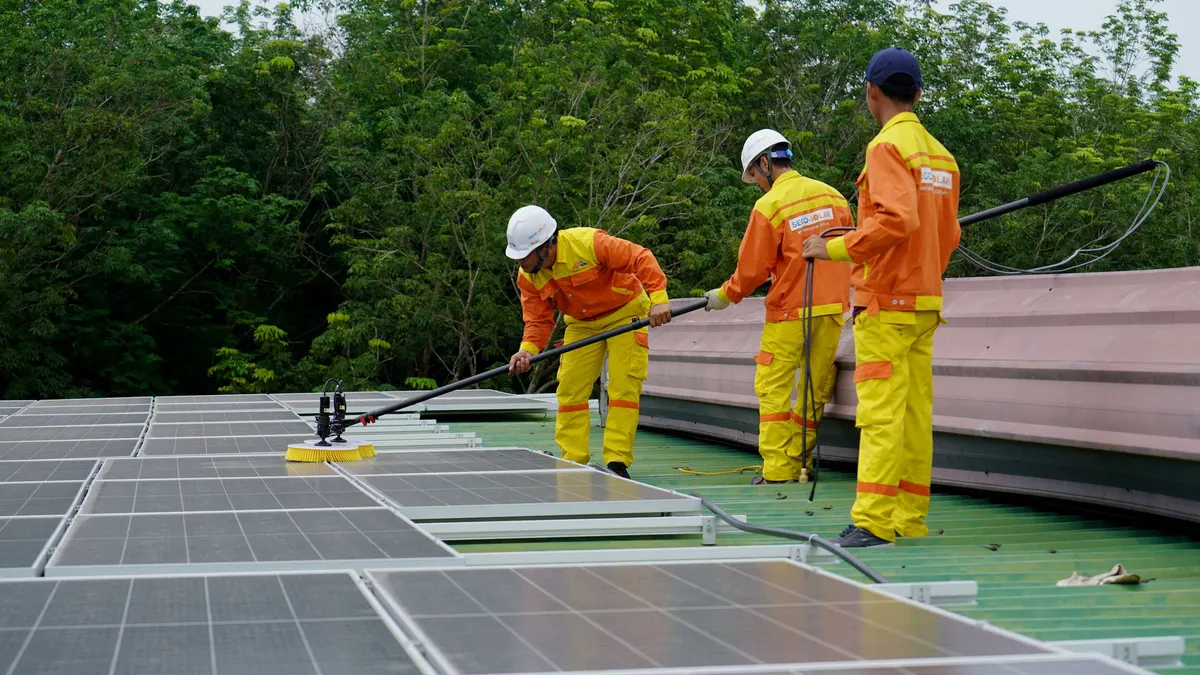
Safety comes first. Never walk on panels, and avoid climbing onto a roof unless you are trained and equipped. Many panels can be cleaned from the ground with a soft brush on an extension pole and a hose. For panels you cannot reach safely, hire a professional cleaner with insurance and fall protection.
Follow the manufacturer’s instructions. Most recommend plain water or a mild soap, a soft brush or sponge, and gentle pressure. Avoid pressure washers, abrasive pads, harsh chemicals and hard water spray that leaves spots. Clean in the early morning or evening, when panels are cool. Spraying cold water on hot glass can stress it.
Snow on solar panels
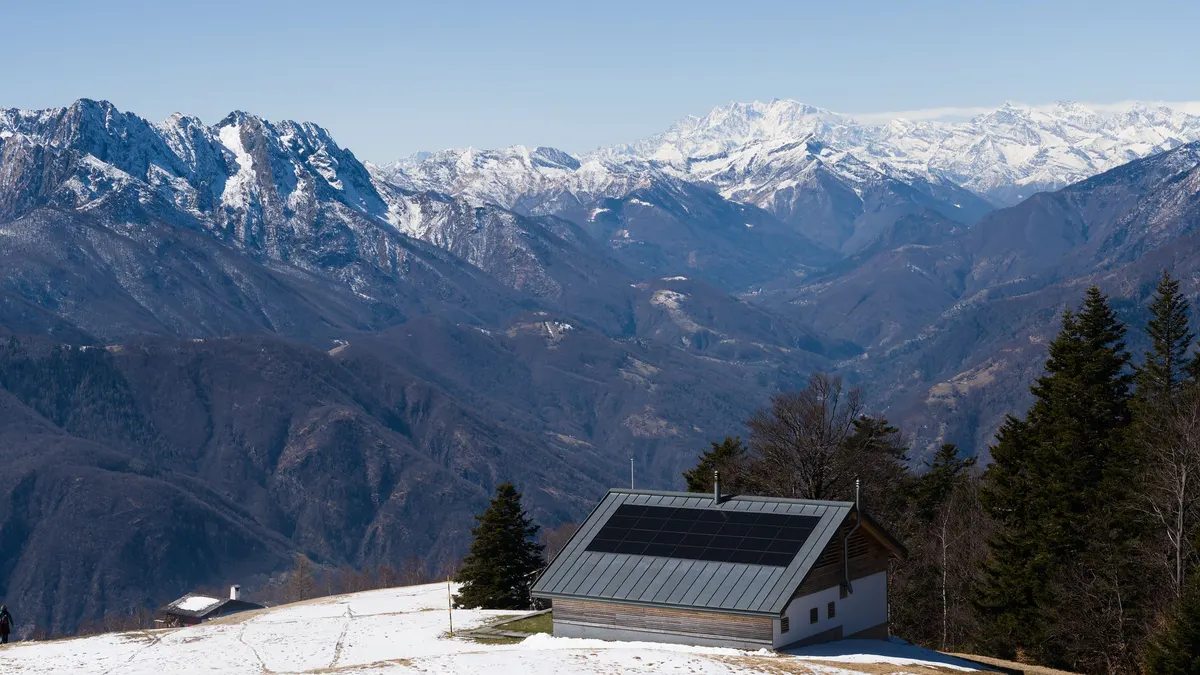
Snow blocks sunlight, so production stops while panels are covered. Fortunately, tilted panels often shed snow on their own. The dark glass warms in the sun, and the snow slides off. Because winter production is already low, waiting a day or two usually costs little energy.
Clearing snow yourself is risky. Climbing on an icy roof is dangerous, and metal scrapers can scratch glass or damage frames. If you want to clear panels, use a roof rake designed for solar panels, with a soft head, from the ground. Even then, check the manufacturer’s guidance. Also, remember that snow sliding off a roof can fall onto walkways, so keep people clear.
Debris, nests and pests
Leaves, branches and debris can collect around panels, especially under them. Over time, that debris traps moisture and can attract pests. Birds and squirrels sometimes nest under panels, where they can chew wiring. If you see nesting, contact your installer. Many offer critter guards, mesh barriers that keep animals out without blocking airflow.
Trimming trees helps too. Overhanging branches drop debris and cast shade. Keeping them trimmed, by a professional when near power lines or the roof, protects both production and the roof.
Inverter care
Inverters convert your panels’ DC power to AC. String inverters usually sit on a wall near the main panel, while microinverters sit under each panel on the roof. Keep wall-mounted inverters clear of clutter and dust, with good airflow around them. Check the display for warnings occasionally. Some inverters have fans or filters that need periodic cleaning, so check the manual.
Inverters typically have shorter lifespans than panels. As a result, many owners replace a string inverter at some point during the system’s life. Microinverters often carry long warranties. Know which type you have, its warranty length and who to contact for service.
Battery and backup checks
If your system includes a battery, check its app for alerts and confirm it charges and discharges as expected. Keep the area around it clear, following the manufacturer’s clearances. Review your backup reserve before storm season. Our solar battery guide explains reserve settings and outage behavior.
Professional solar panel maintenance and inspections
Some owners schedule a professional inspection every few years, or after major storms. An inspection can include checking mounts and roof penetrations, testing electrical connections, scanning for hot spots and reviewing inverter logs. If your monitoring looks normal and nothing has changed, inspections can be infrequent. If production drops or you see damage, schedule one promptly.
Electrical work on solar systems must follow the National Electrical Code and local rules. Therefore, leave any wiring, inverter or panel replacement to licensed professionals.
Warranties and solar panel maintenance
Solar systems usually carry several warranties: one for panel performance, one for panel materials, one for inverters and one for the installer’s workmanship. Read them. Some require registration, approved cleaning methods or service by authorized technicians. Unapproved repairs or cleaning methods can void coverage.
Keep records of installation dates, warranty documents and any service. If you sell your home, those records help buyers understand the system and its remaining coverage.
Solar panel maintenance by season
Each season brings its own tasks, so a short seasonal routine keeps cleaning solar panels and other chores to a minimum. In spring, check for winter damage, clear debris and watch for pollen buildup during dry spells. Summer calls for watching production during heat waves, because hot panels produce somewhat less, and look for new shade as trees fill out. Autumn is the time to clear leaves from around panels and gutters, and check the backup reserve on any battery before storm season.
Winter is mostly about patience. Low sun and snow cut production, which is normal. Rather than climbing onto the roof, let snow slide off and check that the inverter resumes normal output when panels clear. Then, after major storms in any season, look for damage from the ground and check monitoring for faults.
Common solar panel maintenance mistakes
A few mistakes cause most of the damage owners do to their own systems. The first is pressure washing, which can force water past seals and damage frames. Walking on panels is another, which can crack cells in ways that are not visible but reduce output for years. Abrasive pads, harsh detergents and hard-water sprays that leave a film also cause harm.
Another common mistake is ignoring monitoring. A fault that cuts output by a third can go unnoticed for months if no one checks the app. Similarly, letting trees grow into the panels’ sun path slowly reduces production. Finally, some owners hire cleaners who are not insured or trained for roof work. Ask for proof of insurance and a description of their method before anyone climbs onto your roof.
What solar panel maintenance costs
Owner maintenance costs almost nothing beyond a few minutes a month and, if needed, a soft brush and pole. Professional cleaning and inspections cost more, and prices vary by region, roof height and system size. Because rain does most of the cleaning, many owners pay for professional cleaning rarely, if ever.
The larger long-term cost is equipment replacement. String inverters often need replacement during the life of the panels, and batteries wear with age. Budget for these over the years, and check warranty coverage first. Good monitoring helps here too, because it shows when a component is starting to fail.
Roof work and solar panels
Roofs and panels share a life. If your roof needs repair or replacement, panels may need to come off and go back on. That work should be done by the original installer or a qualified solar contractor, because it affects warranties and roof penetrations. Plan roof work with your solar company, and ask for a written quote for removal and reinstallation.
| Task | How often | Who |
|---|---|---|
| Check monitoring for production drops | Weekly or monthly, and after storms | Owner |
| Look for visible damage and new shade | A few times a year | Owner, from the ground |
| Clean panels | Only when monitoring shows soiling losses | Owner from the ground, or a professional |
| Check inverter display and airflow | A few times a year | Owner |
| Professional inspection | Every few years or after damage | Installer or qualified technician |
| Inverter, wiring or panel repairs | As needed | Licensed professional |
Solar panel maintenance checklist
- Turn on monitoring alerts and check production regularly.
- Compare output with last year and the installer’s estimate.
- Look for damage, debris and new shade from the ground.
- Clean only when soiling clearly cuts output.
- Use soft brushes and plain water; never pressure wash.
- Let snow slide off, or use a solar-safe roof rake from the ground.
- Keep the inverter area clear and check for codes.
- Keep warranty documents and service records together.
Gear for safe cleaning
If your panels are reachable from the ground and your manufacturer allows it, a soft solar panel cleaning brush with an extension pole and a gentle hose nozzle are usually all you need. For snow, compare solar-safe snow rakes. Always follow the manufacturer’s instructions. For more on owning solar, visit our Home Solar hub.
Frequently asked questions about solar panel maintenance
Do solar panels need maintenance?
Very little. Panels have no moving parts, and rain cleans most of them. The most useful maintenance is checking your monitoring for drops in production, keeping panels clear of shade and debris, and having the system inspected if something looks wrong.
How often should I clean solar panels?
Only when needed. In many climates, rain keeps panels clean enough. Clean when monitoring shows a production drop you can trace to dirt, pollen, dust or bird droppings, and follow the manufacturer’s cleaning instructions.
Should I remove snow from solar panels?
Usually not. Tilted panels often shed snow on their own as the sun warms them. Climbing on a snowy roof is dangerous, and scraping can damage panels. If you must clear panels, use a tool and method the manufacturer allows, from the ground.
How do I know if my solar panels are working?
Check your monitoring app or inverter display. Compare daily or monthly production with the same period last year and with your installer’s estimate. A sudden drop on a sunny day often signals shading, soiling or an equipment fault.
Can I pressure wash solar panels?
No. High pressure can damage panel seals and frames and may void the warranty. Most manufacturers recommend soft brushes or sponges with plain water or mild soap, used gently.
Sources and how we researched this guide
This guide is research-based. We did not test cleaning methods; we summarize common manufacturer guidance and Department of Energy solar information. Your panel and inverter manuals and warranty terms take precedence, and roof work should be left to trained crews. Found something out of date? Tell us and we will check it against the source.
- U.S. Department of Energy: Homeowner’s guide to going solar
- U.S. Department of Energy: Solar integration and distributed energy
- NFPA 70: National Electrical Code
- SEIA: Net metering
Keep planning
- Off-Grid Solar System: How to Size Panels, Batteries and Backup
- Net Metering Explained: How Solar Export Credits Work and Why They Matter
- Solar Tax Credit in 2026: What Ended, What Remains and What to Do Now
- Are Solar Panels Worth It? How to Decide With Your Own Numbers
Go deeper: Home Solar hub · Solar Panel Calculator · Solar Payback Calculator
