
How Many Watts Does a Refrigerator Use? Running, Starting and Daily kWh

Ask “how many watts does a refrigerator use?” and you will find wildly different answers. That is because refrigerator wattage is really three numbers: the running watts when the compressor is on, a short starting surge when it kicks on, and the total energy used over a day. Each number answers a different question. This guide explains all three, shows how to measure your own fridge wattage, and explains how to size a generator or battery for it.
Last reviewed and updated: October 2, 2026. Written by Jeremy Jarvis.
Key takeaways
- Refrigerator wattage has three numbers: running watts when the compressor runs, a brief starting surge, and daily energy in kilowatt-hours.
- Because the compressor cycles on and off, daily energy is far below nameplate watts times 24 hours.
- The EnergyGuide label’s yearly kWh, or a plug-in meter, gives the most useful number for costs and battery sizing.
- Size generators for the starting surge, and size batteries for daily kilowatt-hours.
You can follow along with our free Electricity Cost Calculator and Home Power Station Selector.
The three refrigerator wattage numbers
First, running watts are what the fridge draws while the compressor runs. Second, starting watts, also called surge, are the brief spike when the compressor starts, which can be several times the running draw for a second or so. Third, daily energy, in kilowatt-hours, is the total electricity used over 24 hours.
Which number matters depends on the job. To size a generator or a power station’s output, you need running and starting watts. By contrast, to size battery capacity or estimate your electricity bill, you need daily kilowatt-hours.
Refrigerator wattage while running
While the compressor runs, many modern refrigerators draw roughly 100 to 250 watts. Larger models, older units and those with features like ice makers can draw more. Defrost heaters, which run periodically in frost-free models, can briefly add several hundred watts. Therefore, the running draw is not constant over a day.
Generator manufacturers’ wattage guides often list a refrigerator at around 700 running watts. Those figures are intentionally conservative, covering older and larger units. For planning a generator, conservative is fine. For a battery, though, using such a high figure all day would overstate your needs.
Refrigerator wattage at startup
Compressors need a burst of power to start. That surge is brief but real, and it is what trips undersized generators and power stations. Generator wattage guides commonly list around 2,200 starting watts for a refrigerator, again a conservative planning figure. Newer refrigerators with inverter or variable-speed compressors often start more gently.
When sizing backup power, the starting surge matters for output, not for capacity. Make sure the generator’s starting watts, or the power station’s surge rating, covers the fridge’s surge plus anything else running at the same time.
Daily energy: the refrigerator wattage that matters for bills
A refrigerator does not run its compressor all the time. It cycles on and off to hold temperature. As a result, its daily energy use is far less than its running watts multiplied by 24 hours. Many modern refrigerators use roughly 1 to 2 kilowatt-hours per day. Large, older or feature-heavy units can use more.
Daily energy depends on the room temperature, how often the doors open, how full the fridge is and the condition of door seals. A fridge in a hot garage works much harder than one in a cool kitchen.
Why the nameplate is misleading
The label inside a refrigerator often lists amps or watts. That figure is usually a maximum, such as the draw during defrost or at startup, not the typical running draw. Multiplying the nameplate by 24 hours overstates daily energy several times over. That mistake leads people to buy batteries far larger than they need.
Instead, use the yearly kilowatt-hours from the EnergyGuide label or measure the fridge directly. Both give realistic numbers.
The EnergyGuide label
The yellow EnergyGuide label lists estimated yearly energy use in kilowatt-hours. Divide by 365 to get a daily estimate. For example, a fridge rated at 500 kilowatt-hours per year uses about 1.4 kilowatt-hours per day. The label also lists an estimated yearly cost based on a national average rate. If the label is gone, look up the model number on the manufacturer’s site.
How to measure your refrigerator wattage
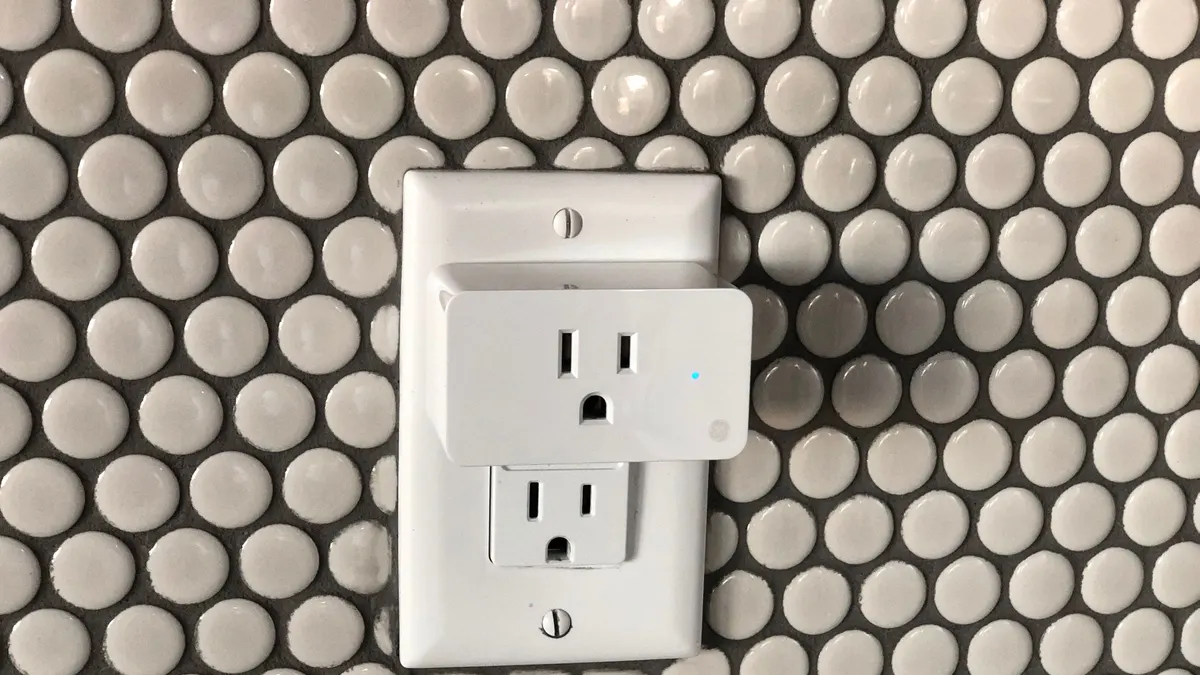
A plug-in energy meter gives the best numbers. Plug the meter into the outlet and the fridge into the meter. Then leave it for at least 24 hours, ideally a few days, to capture full cycles, including defrost. The meter shows running watts at a moment and total kilowatt-hours over the period. Divide by the number of days for your daily use.
If your fridge is hardwired or hard to reach, a whole-home energy monitor with circuit tracking can do the job. Our home energy monitor guide explains the options.

What a refrigerator costs to run
To estimate cost, multiply daily kilowatt-hours by your electricity rate, then by 30 for a month or 365 for a year. For example, 1.4 kilowatt-hours per day at 17 cents per kilowatt-hour is about 24 cents per day, about 7 dollars a month and about 87 dollars a year. Your rate may differ, so check your bill. The Electricity Cost Calculator does this math for you.
| Number | Typical range for a modern fridge | Use it for |
|---|---|---|
| Running watts | Roughly 100 to 250 W while the compressor runs | Power station continuous output |
| Starting watts | A brief surge several times running watts | Generator starting watts, power station surge |
| Daily energy | Roughly 1 to 2 kWh per day | Battery capacity, electricity cost |
| Generator planning figure | About 700 running and 2,200 starting watts | Conservative generator sizing |
Factors that change fridge wattage
Several factors raise energy use. Hot rooms make the compressor work harder. Frequent door openings let cold air out. Worn door seals leak cold air. Dusty condenser coils reduce efficiency. Ice makers, water dispensers and side-by-side designs often use more energy than simpler top-freezer models.
Simple habits help. Keep the fridge out of direct sun and away from the oven. Clean the coils as the manual recommends. Check door seals with a sheet of paper; if it slides out easily when the door is closed, the seal may need replacing. Set the fridge and freezer to recommended temperatures rather than colder than needed.
Sizing backup power for a refrigerator
For a generator, size by watts. The generator’s starting watts must cover the fridge’s surge plus other loads, and its running watts must cover everything running together. Our Home Generator Size Calculator includes a refrigerator line.
For a battery or power station, size by both. The continuous output must cover the fridge’s running draw, and the surge rating must handle the compressor start. Then the capacity decides how long it runs. For example, a fridge using 1.4 kilowatt-hours a day needs a station with about 1,700 watt-hours usable to run a full day after losses. Our Home Power Station Selector uses an average-draw approach so you do not oversize.
Freezers, mini fridges and second refrigerators
Other cold appliances follow the same logic. Chest freezers are often efficient because cold air stays in when the lid opens. Upright freezers are more convenient but can lose more cold air. Mini fridges are small, yet some use surprisingly much energy for their size because of basic compressors and thin insulation. Wine coolers and beverage fridges add up too, especially in warm rooms.
Second refrigerators in garages deserve a hard look. Garages get hot in summer, which raises refrigerator wattage over the day as the compressor runs longer. In winter, some refrigerators struggle in very cold garages, because their thermostats sit in the fresh-food section. Check the manufacturer’s rated operating temperature range before putting any fridge in a garage.
Inverter compressors and newer designs
Many newer refrigerators use inverter or variable-speed compressors. Instead of switching fully on and off, they speed up and slow down to match demand. As a result, they often start more gently and run more quietly, with smaller power swings. That can make them easier to run from power stations and inverter generators, although you should still check the surge rating.
Designs also differ. Top-freezer models are often among the most efficient for their size. French-door and side-by-side models are popular but can use more energy, especially with dispensers. If efficiency and backup power matter to you, compare EnergyGuide labels across configurations before you buy.
A worked example for an outage
Suppose your measured refrigerator wattage shows about 150 watts while running and about 1.4 kilowatt-hours per day. During an outage, you want to run it from a power station for 24 hours. First, check output: the station’s continuous rating must exceed 150 watts with headroom, and its surge rating must handle the compressor start. Most mid-size and large stations meet that.
Next, check capacity. With roughly 15 percent losses, you need about 1.6 to 1.7 kilowatt-hours usable for a full day. A station with about 2,000 watt-hours usable would cover it with some margin. Keep the door closed, and the fridge will use less. If you also want to run a freezer, add its daily energy too. Our Home Power Station Selector does this for your list.
Old vs. new refrigerators
Older refrigerators often use much more energy. ENERGY STAR notes that refrigerators over 15 years old could be costing you about 95 dollars per year to run, and that, on average, an old refrigerator uses about 20 percent more energy than a certified model. Replacing an old unit can therefore lower both bills and backup power needs. Our energy efficient appliances guide explains when replacement pays off.
Fridge wattage myths
A few myths cause confusion about fridge wattage. The first is that a refrigerator runs at its label wattage all day. In reality, the compressor cycles, so the average draw is much lower. The second myth is that a power station rated for a fridge’s running watts can always run it. Without enough surge capacity, the compressor may fail to start, even if running watts look fine.
A third myth is that turning the fridge colder keeps food safer in outages. Setting it to recommended temperatures before a storm is wise, but extreme settings mainly waste energy. Finally, some people believe unplugging the fridge at night saves money. It does not help, because the compressor simply works harder to recover, and food safety suffers.
Refrigerator wattage checklist
- Find running watts, starting surge and daily kilowatt-hours separately.
- Use the EnergyGuide yearly kWh divided by 365 for daily use.
- Measure with a plug-in meter for at least 24 hours.
- Avoid multiplying nameplate watts by 24 hours.
- Size generators for starting watts and battery capacity for daily kWh.
- Keep coils clean and door seals tight.
- Consider replacing a refrigerator older than 15 years.
Measure yours
A plug-in electricity usage meter is the easiest way to learn your fridge wattage. If you are planning backup power, compare power stations that can run a refrigerator after you know your numbers. For outage food safety, read our guide to food in a fridge without power.
Frequently asked questions about refrigerator wattage
How many watts does a refrigerator use?
While the compressor runs, many modern refrigerators draw roughly 100 to 250 watts, with a brief starting surge several times higher. Older and larger units can draw more. Your fridge’s label, manual or a plug-in meter gives the real figure.
How much electricity does a refrigerator use per day?
Many modern refrigerators use roughly 1 to 2 kilowatt-hours per day. Divide the yearly kilowatt-hours on the EnergyGuide label by 365 for your model’s estimate.
What size generator do I need for a refrigerator?
Generator makers’ wattage guides commonly list a refrigerator at about 700 running watts and about 2,200 starting watts, which are conservative planning figures. Choose a generator whose starting watts cover your fridge’s surge plus your other loads.
Can a portable power station run a refrigerator?
Yes, if its continuous output covers the fridge’s running draw and its surge rating handles the compressor start. Its capacity then decides how long it lasts; a unit with about 2,000 watt-hours usable can often run a modern fridge for about a day.
Do old refrigerators use more electricity?
Often yes. ENERGY STAR notes that refrigerators over 15 years old could be costing about 95 dollars per year to run, and that an old refrigerator uses about 20 percent more energy on average than a certified model.
Sources and how we researched this guide
This guide is research-based. We did not measure specific refrigerators; we explain the difference between running watts, starting surge and daily energy, use ENERGY STAR’s published refrigerator information, and show the math used in our free calculators. Measure your own refrigerator for the most accurate numbers. Found something out of date? Tell us and we will check it against the source.
- ENERGY STAR: Refrigerators
- U.S. Department of Energy: Energy Saver
- EIA: Average residential electricity price by state
- Ready.gov: Power outages
Keep planning
- Home Energy Monitor: How It Works, What It Shows and How to Choose
- Energy Efficient Appliances: Which Upgrades Save the Most and When to Buy
- Home Energy Audit: What It Finds, What It Costs and How to Do Your Own
- Heat Pump Water Heater: How It Works, Where It Fits and What It Saves
Go deeper: Energy Savings hub · Electricity Cost Calculator · Solar Payback Calculator
