
Tesla Wall Connector: Specs, Circuit Sizing and Installation Explained
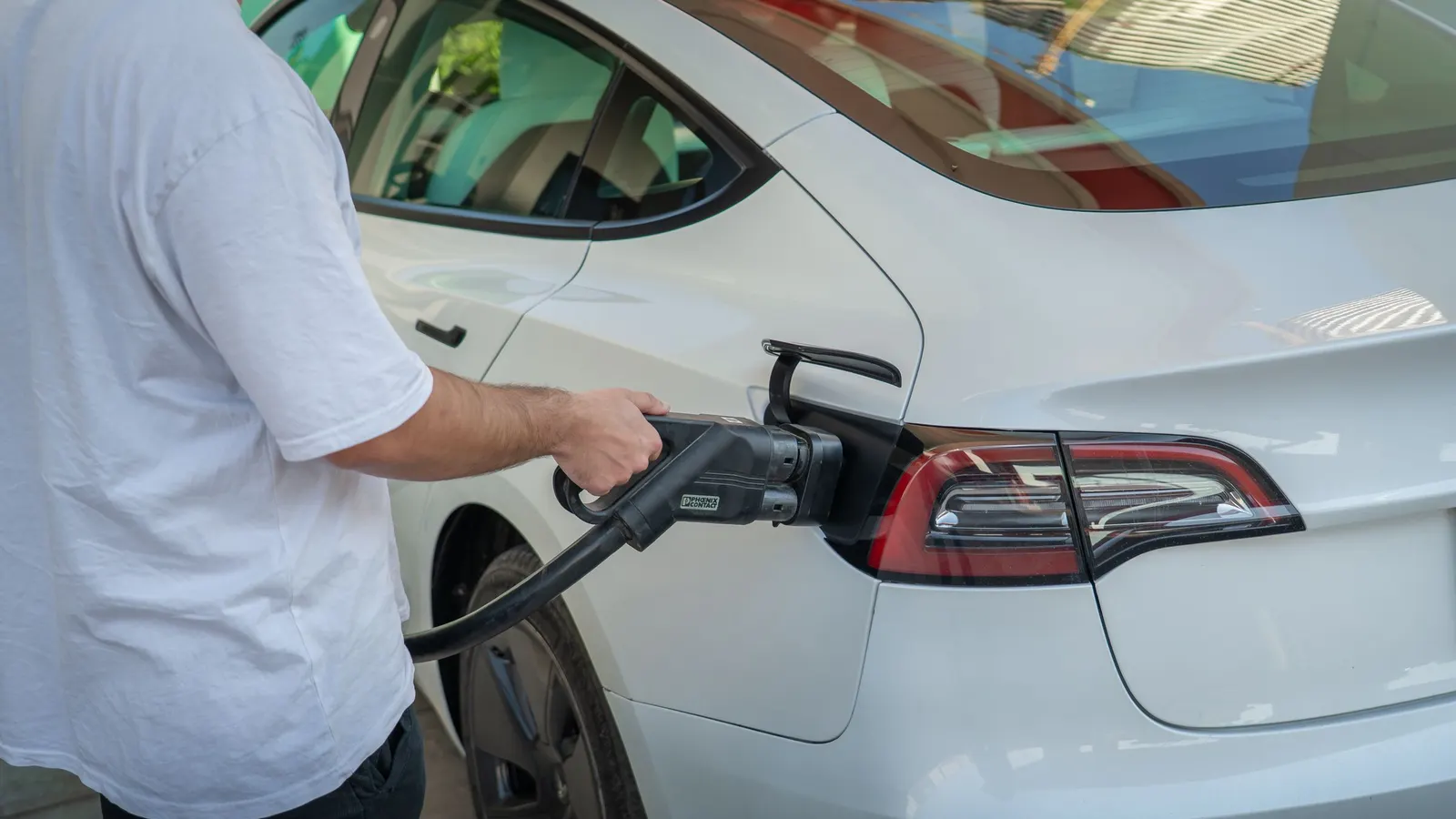
The Tesla Wall Connector is one of the most popular home EV chargers in the United States. Because it is a hardwired Level 2 charger, it mounts on a garage wall or outside the home. Because it can deliver more current than a typical outlet-based setup, it charges quickly and neatly. This guide explains Tesla’s published specifications, how to size the circuit, power sharing, non-Tesla use and what a wall connector installation involves. We have not tested the unit, and we are not affiliated with Tesla, so we stick to published information.
Last reviewed and updated: October 2, 2026. Written by Jeremy Jarvis.
Key takeaways
- The Tesla Wall Connector is a hardwired Level 2 charger that Tesla rates for up to 48 amps on a 60-amp circuit.
- Your electrician sets its maximum current to match the breaker, so smaller circuits work at lower charging speeds.
- Power sharing lets several Wall Connectors split one circuit, which helps two-EV households.
- Choose the version with the connector your vehicle uses, and have a licensed electrician install it with a permit.
For a broader comparison of home chargers, read our Level 2 EV charger guide. Then come back here for details on this specific Tesla charger.
What the Tesla Wall Connector is
The Wall Connector is a Level 2 charger. That means it runs on a 240-volt circuit, like an electric dryer, rather than a standard 120-volt outlet. Unlike a mobile connector that plugs into an outlet, it is hardwired directly to a dedicated circuit. As a result, it can deliver higher current and is built for daily use.
Also, Tesla sells more than one version. The standard Wall Connector has the connector used by Tesla vehicles, which has also been adopted by many other automakers under the SAE J3400 standard. In addition, Tesla sells a Universal Wall Connector with a built-in adapter for vehicles that use the J1772 connector.
Published specifications
Tesla’s published information for the current Wall Connector lists these headline figures. Check the current product page and installation manual before you buy, because details can change.
| Item | Tesla’s published figure |
|---|---|
| Maximum output | Up to 48 amps, about 11.5 kW |
| Recommended circuit for maximum output | 60-amp breaker |
| Voltage | Single-phase 200 to 240 volts |
| Adjustable current | Configurable for lower currents on smaller circuits |
| Cable | Long attached cable, with length listed on the product page |
| Connectivity | Wi-Fi for updates and settings |
Of these, two figures matter most. The maximum output sets the fastest possible charging. The circuit size sets what your home can actually supply.
Circuit and breaker sizing
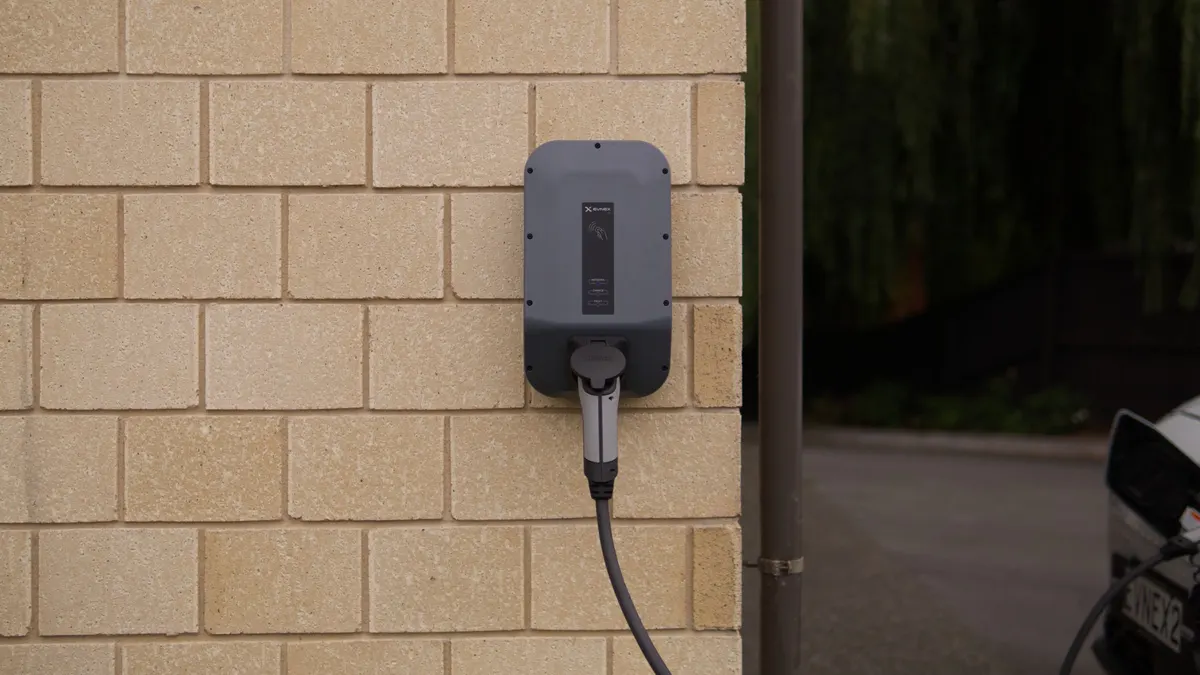
EV charging is a continuous load. Under the National Electrical Code, a continuous load should not exceed 80 percent of the circuit’s rating. Therefore, a 48-amp charger needs a 60-amp circuit. A 40-amp setting suits a 50-amp circuit, and a 32-amp setting suits a 40-amp circuit. Your electrician configures the Wall Connector’s maximum current to match the breaker and wire.
Your main panel also matters, because it feeds every circuit. The Department of Energy notes that some homes have insufficient electric capacity for Level 2 equipment, and that an electrician can add capacity. A load calculation tells you whether your panel can support a 60-amp circuit, or whether a smaller circuit, load management or a panel upgrade is the right path.
Charging speed
In practice, charging speed depends on three things: the circuit, the charger setting and the car’s onboard charger. A car can only accept as much power as its onboard charger allows. If your vehicle’s limit is lower than the Wall Connector’s output, the car sets the pace.
For a sense of scale, ENERGY STAR describes typical Level 2 charging as adding about 10 to 20 miles of range per hour, with chargers wired to 50 amps or more providing faster charging. A Wall Connector at its maximum setting can exceed that range for compatible vehicles. Our EV Charging Time Calculator estimates hours from your circuit and car.
Power sharing for two-EV homes
For two-EV homes, power sharing is a standout feature. Several Wall Connectors can be linked over Wi-Fi to share one circuit. They split the available current between connected cars, so two vehicles can charge overnight without a second large circuit. When one car finishes, the other receives the full share.
As a result, it can save money in homes with limited panel capacity. Instead of adding two 60-amp circuits, an electrician may install one and let the chargers share it. Ask your electrician whether power sharing suits your panel and charging habits.
Using it with non-Tesla vehicles
Many automakers have adopted the connector Tesla uses, standardized as SAE J3400 and often called NACS. Vehicles with that port can use a standard Wall Connector directly. Vehicles with a J1772 port can use the Universal Wall Connector, which includes an adapter, or a separate adapter approved by the vehicle maker.
Before you buy, check your vehicle’s port and the automaker’s guidance. If you expect to own vehicles with different ports, the Universal version may be the more flexible choice.
Wall Connector vs. outlet and mobile connector
Many EV owners charge with a mobile connector plugged into a NEMA 14-50 outlet. That setup is simple and portable. However, a 50-amp outlet supports only 40 amps of continuous charging, and outlets can wear with daily heavy use. A hardwired Wall Connector can deliver up to 48 amps on a 60-amp circuit, has no outlet to wear and supports power sharing. Our NEMA 14-50 outlet guide explains the outlet route in detail.
Wall connector installation steps
As with any 240-volt circuit, a licensed electrician should install the Wall Connector. A typical job looks like this:
- Site visit to check the panel, the parking spot and the wire route.
- Load calculation to confirm capacity, or a plan for load management or an upgrade.
- Permit from the local building department.
- Mounting the charger and running a dedicated 240-volt circuit with correctly sized wire.
- Setting the charger’s maximum current to match the breaker.
- Connecting it to Wi-Fi, testing and inspection.
Tesla’s installation manual describes the settings and wiring requirements in detail. Your electrician should follow it along with local code.
Choosing the mounting location
First, location affects convenience, cost and safety. Start with the car. Park where you usually park, then note where the charge port sits. The charger should be close enough that the cable reaches comfortably without stretching across walkways. If you have two vehicles, think about how both will reach, especially if you plan power sharing.
Next, think about the wire route. A spot on the garage wall that backs onto the main panel keeps the run short, which lowers wall connector installation cost. However, convenience still matters. A short run that forces you to drape a cable across the garage every night is a poor trade. Your electrician can suggest a balance.
Outdoor mounting is common for driveways. Tesla rates the Wall Connector for indoor and outdoor use, but check the current installation manual for the exact conditions. Protect the cable from being driven over, and keep the unit clear of sprinklers and snow piles.
Smart features and settings
The Wall Connector connects to Wi-Fi. That allows firmware updates, setup and features such as power sharing. Meanwhile, many owners manage charging schedules from the vehicle’s app rather than the charger. For example, you can set the car to start charging after midnight, when many utilities offer cheaper off-peak rates.
Also, make sure your Wi-Fi reaches the garage or driveway. If the signal is weak, a mesh extender can help. Although the charger works without Wi-Fi for basic charging, updates and some features need a connection.
Living with a home charger
Most EV owners settle into a simple habit: plug in every night, like a phone. Because a Level 2 charger refills a typical daily commute in a few hours, the car is ready each morning. Charging to a set limit, rather than 100 percent every night, is common practice for battery care; follow your vehicle maker’s guidance.
Off-peak charging is where home charging saves the most. Our EV Charging Cost Calculator compares your monthly cost with gasoline, so you can see the effect of an off-peak rate. In addition, check whether your utility offers an EV-specific rate plan.
Questions to ask your electrician
A few questions make the quote clearer. Will you perform a load calculation, and does my panel have room for a 60-amp circuit? What wire size and route will you use? Will you pull the permit and schedule the inspection? How will you set the charger’s maximum current, and can it be raised later if I upgrade the panel?
Finally, ask about the future. If you might add a second EV, a battery or solar, mention it now. Planning the panel layout once often costs less than reworking it later.
Common mistakes to avoid
The most common mistake is buying the charger before checking the panel. A home without enough capacity may need load management or an upgrade, which changes the plan. Another mistake is mounting the charger where the cable barely reaches, which strains the cable and connector. Similarly, skipping the permit can cause problems with insurance or a future home sale.
Finally, avoid using extension cords or adapters that are not approved for EV charging. Charging draws high current for hours, so every connection matters. Keep the setup simple: a dedicated circuit, a correctly configured charger and a licensed installation.
What affects installation cost
However, the charger itself is only part of the cost. Labor and materials often make up the larger share. Distance from the panel to the charger, the wire gauge needed for the current, wall and floor finishes along the route, permit fees and any panel upgrade all affect the total. A charger mounted on the other side of a garage wall from the panel is the simplest case. A long run through finished space is the most complex. Our EV charger installation cost guide breaks this down.
Incentives
The IRS states that the federal alternative fuel vehicle refueling property credit applied to property from January 1, 2023, to June 30, 2026. For home use, it was 30 percent of the cost up to $1,000 per item, and only in eligible census tracts. Chargers placed in service after June 30, 2026 do not qualify. Some utilities and states still offer rebates or special EV rates, so check before you buy.
EV charging and power outages
A Wall Connector stops charging when the power goes out. Most generators and home batteries should not power an EV charger, because it is one of the largest loads in a home. Instead, charge before forecast storms. If you have a home battery, ask your installer how the charger is wired relative to the backup panel.
Tesla Wall Connector checklist
- Confirm your vehicle’s connector and choose the matching version.
- Ask for a load calculation on your main panel.
- Choose a circuit size: 60-amp for maximum output, or smaller.
- Plan the mounting spot so the cable reaches the charge port.
- Consider power sharing if you have two EVs.
- Hire a licensed electrician and get a permit.
- Check utility rebates and EV rate plans.
- Schedule charging overnight on off-peak rates.
Where to compare
Compare the Tesla Wall Connector and other 48-amp hardwired chargers once your electrician confirms circuit size. Confirm specifications and compatibility with each manufacturer. For more on home charging, visit our EV Charging hub.
Frequently asked questions about the Tesla Wall Connector
What breaker does a Tesla Wall Connector need?
Tesla’s installation information pairs its maximum 48 amp output with a 60 amp circuit breaker. The charger can be configured for lower currents on smaller circuits, and the electrician sets the maximum to match the breaker and wiring.
How fast does a Tesla Wall Connector charge?
Charging speed depends on the circuit, the charger setting and the car’s onboard charger. At its maximum setting, the Wall Connector delivers its full rated power to compatible vehicles, which can add far more range per hour than a standard household outlet.
Can a Tesla Wall Connector charge other EVs?
Vehicles with the same connector type can use it directly, and many automakers have adopted the connector Tesla uses. Tesla also sells a Universal Wall Connector with a built-in adapter for J1772 vehicles.
Is a Wall Connector better than a NEMA 14-50 outlet?
A hardwired Wall Connector can deliver more current than a 50 amp outlet allows for charging, avoids outlet wear from daily use and supports power sharing. An outlet with a mobile connector costs less and is portable.
Can I install a Tesla Wall Connector myself?
We recommend a licensed electrician. The job involves a 240 volt circuit, correct wire and breaker sizing, the charger’s current setting and usually a permit and inspection.
Sources and how we researched this guide
This guide is research-based. We have not installed or tested a Wall Connector. Specifications come from Tesla’s published Wall Connector product and installation information as of October 2026; confirm current details with Tesla and your electrician. We are not affiliated with Tesla. Found something out of date? Tell us and we will check it against the source.
- Tesla: Wall Connector support
- Tesla: Gen 3 Wall Connector installation manual (PDF)
- DOE Alternative Fuels Data Center: Charging at home
- ENERGY STAR: Electric vehicle chargers
- IRS: Alternative fuel vehicle refueling property credit
Keep planning
- EV Charger Installation Cost: What Drives the Price and How to Save
- Portable EV Charger: How It Works, What It Can Do and How to Choose
- NEMA 14-50 Outlet for EV Charging: Requirements, Safety and Costs
- Level 2 EV Charger: How to Choose and Install One at Home
Go deeper: EV Charging hub · EV Charging Cost Calculator · EV Charging Time Calculator
