
Generator vs Battery Backup: Which One Fits Your Home?

The generator vs battery backup decision usually gets framed as a question about technology. In practice it is a question about your outages. How long do they last, how often do they happen, and what has to keep running while they do? Answer those three first, and the hardware choice mostly answers itself.
Both systems do the same headline job. They keep the lights on when the grid goes down. But they fail in completely different directions. A generator will run for days if you keep feeding it, yet it makes noise, needs fuel and produces exhaust that kills people every winter. A battery is silent, safe indoors and needs no fuel at all, yet it runs out. This guide walks through where each one wins, who should skip each one, and how to size whichever you pick.
Last reviewed and updated: October 8, 2026. How this guide was researched: this generator vs battery backup comparison is desk research, not a product test. Outage figures come from the U.S. Energy Information Administration, carbon monoxide figures from the U.S. Consumer Product Safety Commission, and wiring requirements from the National Electrical Code as summarised by industry sources. We did not bench-test any generator or battery, and nothing here should be read as a hands-on review.
If you are pricing this out, the 120V 30 Amp Automatic Transfer Switch is one option that fits the setup described above.
Generator vs battery backup: the short answer
If your outages are long, a generator is hard to beat. Fuel is the only limit, so a standby unit on a natural gas line can carry a house for days. If your outages are short and frequent, a battery is usually the better fit, because it switches over instantly and you never hear it.
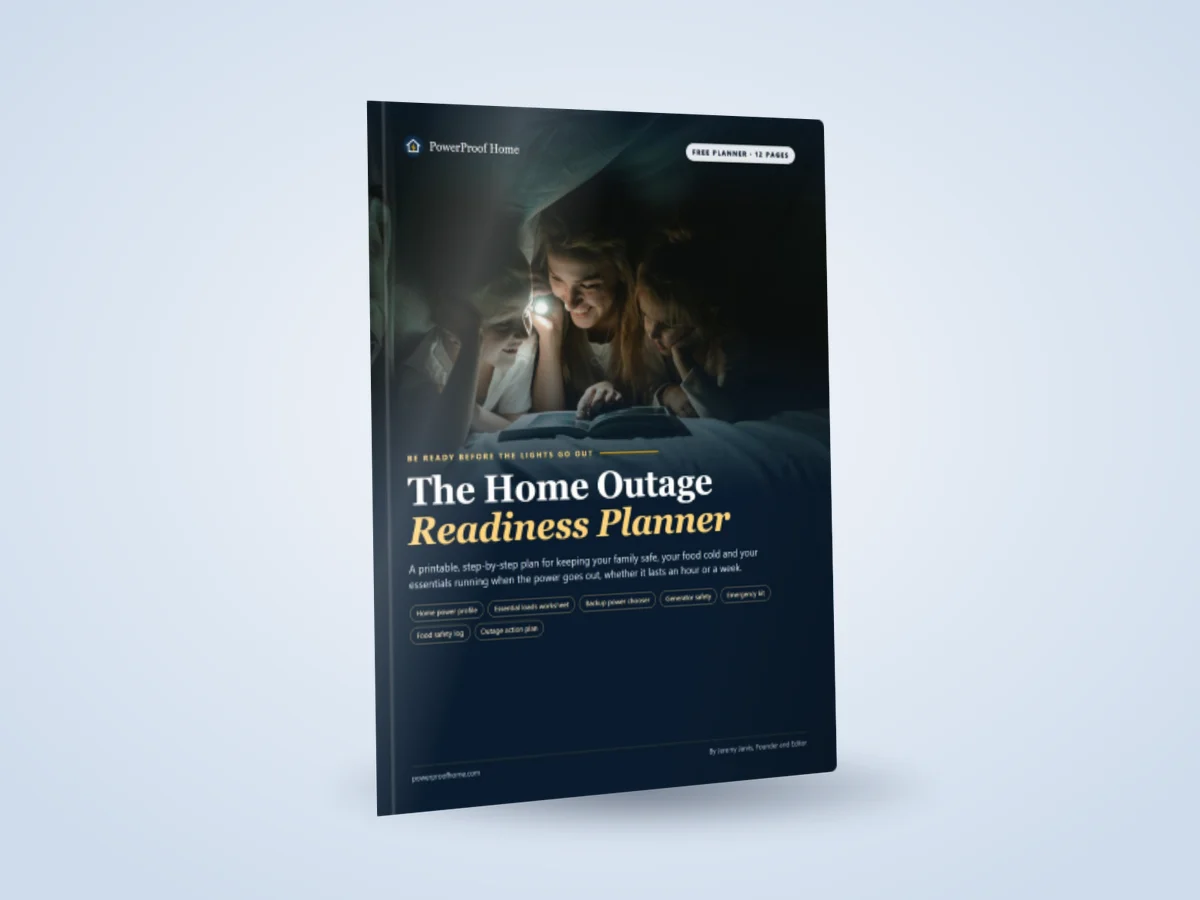
Free download: The Home Outage Readiness Planner
Our 12-page printable planner: a home power profile, essential loads worksheet, backup power chooser, safety rules, emergency kit and food safety log.
In most generator vs battery backup decisions, many homes end up wanting both, and that combination is more common than it sounds. The battery covers the first few hours seamlessly, while the generator exists for the rare multi-day event. That said, most people are choosing one. So the rest of this guide is about which one, and why.
How long do outages actually last?
This is the number that should drive any generator vs battery backup decision, and it is measured rather than guessed. The U.S. Energy Information Administration tracks it as SAIDI, the average annual interruption duration per customer.
In 2024, the average American customer was without power for about 11 hours across the year. That was roughly double the average of a decade earlier. The detail underneath that figure matters more than the headline, though:
- Outages not caused by a major event average about two hours per year.
- Major-event outages averaged nearly nine hours in 2024, against roughly four hours per year across 2014 to 2023.
- Three hurricanes, Beryl, Helene and Milton, accounted for 80 percent of all customer-hours without power that year.
So the typical year is quiet, and the damage is concentrated in a handful of severe events. That split is exactly why the two technologies diverge. A battery sized for a few hours handles almost every outage you will ever see. It will not, however, handle the one that matters most.

Your own utility publishes its reliability numbers, and they can differ sharply from the national average. Rural feeders and heavily wooded areas tend to run worse. Check yours before you size anything.
How each system works
What a home generator does
A generator burns fuel to turn an engine, and the engine spins an alternator that makes electricity. A permanently installed standby unit sits outside on a pad, monitors the utility feed, and starts itself within seconds of an outage. It then runs until the fuel stops or you shut it down.
Fuel is the defining variable. Natural gas units draw from the street main, so they effectively have unlimited runtime as long as the gas keeps flowing. Propane units draw from a tank you own, which means runtime is a function of tank size. Gasoline portables depend on whatever you can store safely and refill during the event, which is the hardest option during a regional emergency because stations need power too.
Portable generators are the cheaper entry point, but they are a manual system. Someone has to wheel it out, start it, and run cords or operate a transfer switch. During an ice storm at 3am, that distinction stops being academic.
What home battery backup does
A home battery stores energy and releases it through an inverter when the grid drops. There is no combustion, so there is no exhaust, no fuel to store and almost no noise. Transfer is effectively instantaneous, which means computers stay on and clocks do not reset.
Capacity is measured in kilowatt-hours, and that single number sets your runtime. A battery does not care how long the outage lasts. It cares how much energy you draw before it empties. Run the fridge, some lights and the internet, and a typical home battery stretches a long way. Add electric heat or central air conditioning, and the same battery empties in a fraction of the time.
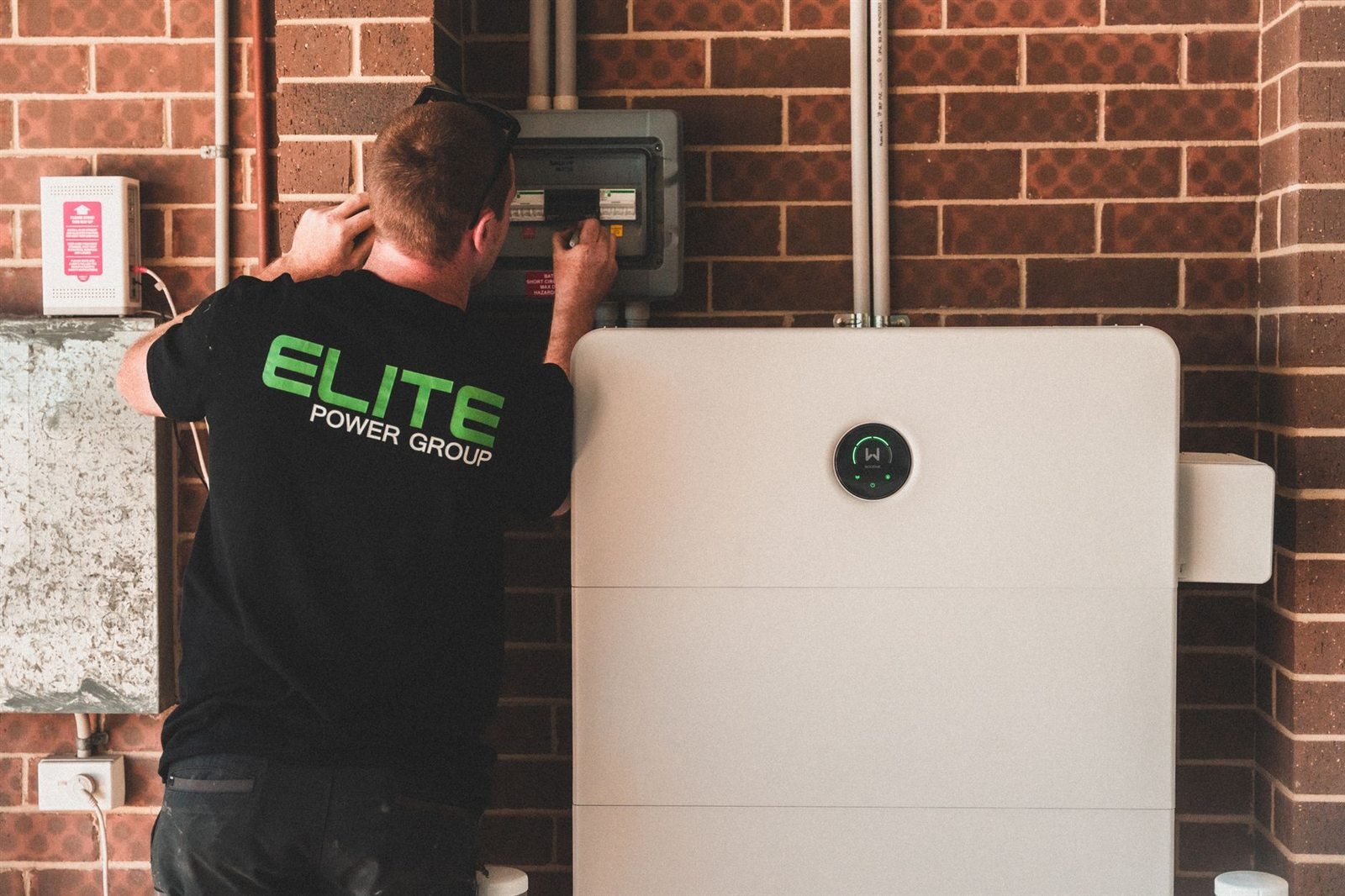
Batteries can also be recharged mid-outage, but only if you have a source. That source is almost always solar, which is why the two technologies are so often sold together.
Generator vs battery backup compared side by side
The table below summarises the generator vs battery backup differences you will actually notice. Use it to find the rows that matter to your household, then read the detail underneath.
| Factor | Home generator | Battery backup |
|---|---|---|
| Runtime limit | Fuel supply, so potentially days | Stored kilowatt-hours, so typically hours |
| Transfer speed | Seconds for standby, manual for portable | Effectively instant |
| Noise | Audible outdoors, varies widely by type | Essentially silent |
| Exhaust risk | Produces carbon monoxide, must stay outdoors | None |
| Fuel handling | Gas line, propane tank or stored gasoline | None |
| Maintenance | Oil, filters, exercise cycles, fuel turnover | Minimal, mostly firmware and inspection |
| Recharge during outage | Refuel | Only with solar or a generator |
| Everyday use | None, it idles until needed | Can shift solar or off-peak energy daily |
| Siting | Outdoors only, with clearances | Garage, utility room or exterior wall |
One row deserves emphasis. A battery earns its keep on ordinary days by storing cheap or self-generated energy and releasing it later. A generator does nothing at all until the grid fails. Depending on your tariff and whether you have solar, that difference can change the whole calculation.
Runtime is the real dividing line
Everything else is a preference. Runtime is a constraint, and it is where the generator vs battery backup comparison stops being close.
Think of it in terms of what you are protecting. A refrigerator, a freezer, some lighting, phone charging and a modem form a modest load, and almost any backup system covers them. Well pumps, sump pumps, electric water heaters, central air and electric resistance heat are a different category entirely. They are large, and several of them are not optional.
For a short outage, the battery wins on experience. Nothing flickers, nothing needs starting and nothing needs fuel. For a three-day winter outage with a well pump and a furnace to run, a battery sized for that job would be very large, while a generator on a gas line simply keeps going. That is the trade in one sentence.
If you want real numbers rather than impressions, work them out with the home battery backup calculator and the home generator size calculator. Both ask for your actual loads instead of a house size, which is the only way to get a useful answer.
Why carbon monoxide decides it for some homes
This section is not a scare tactic. Carbon monoxide is the single clearest safety difference in the generator vs battery backup comparison, and the data is unambiguous.
The U.S. Consumer Product Safety Commission tracks non-fire carbon monoxide deaths associated with consumer products. Across 2009 to 2019, portable generators were associated with an estimated 765 deaths, about 40 percent of all consumer-product CO deaths under the agency’s jurisdiction. In 2020, generators accounted for 92 of the 211 consumer-product CO deaths recorded, the largest share of any single product category.
The pattern inside those numbers is the useful part:
- More than half of the deaths happened in the four cold months, November through February.
- Almost 70 percent occurred at a home.
- Where they happened at a home, the generator was frequently running in a basement, a crawlspace, a garage or an enclosed carport.
In other words, the danger is not the machine. It is where people put the machine when it is cold, wet or dark outside. A generator must run outdoors, well clear of windows, doors and vents, and never in a garage even with the door open. If your household realistically cannot guarantee that, a battery removes the hazard entirely rather than managing it.
Either way, fit working CO alarms on every level of the house. That advice holds whichever system you choose, and it holds even if you choose neither.
Noise, permits and the transfer switch rule
Noise is the complaint people underestimate. A battery makes none. Generators vary enormously, and the difference between a basic open-frame unit and a well-enclosed one is the difference between a conversation and a shout. If you have close neighbours or a noise ordinance, read our guide to the quiet generator options before you commit.
Permits and electrical code apply to both. The critical rule is the same either way: a backup source must never feed power back into the utility lines. Backfeeding endangers line workers and can destroy your own equipment.
Under the National Electrical Code, Article 702 covers optional standby systems, and 702.6 requires transfer equipment designed so the normal and alternate sources cannot be interconnected during transfer. A transfer switch is required when a fixed or portable standby generator is connected to premises wiring. Article 702.4 governs how the load is calculated, and 702.10 covers grounding for portable units. Parallel operation with the utility falls under Article 705 instead, which is the article that generally applies to grid-tied solar and storage.
Code editions differ by jurisdiction, so confirm which one your area has adopted and use a licensed electrician. If you are weighing the options, start with the transfer switch selector, then read up on the generator interlock kit and the full generator transfer switch guide.
Does solar change the answer?
Yes, substantially. Solar shifts the generator vs battery backup balance because it lets a battery refill itself during a multi-day outage, which removes the battery’s main weakness.
Here is the catch that surprises people. A grid-tied solar array without storage shuts down during an outage. It has to, for the same backfeed safety reason above. So solar panels alone provide no backup at all. Pairing them with a battery is what creates a system that can ride through consecutive days: the battery carries the night, the panels refill it the next morning.
That combination has limits too. Winter storms bring short days and heavy cloud, and snow on panels produces nothing. A hurricane week is usually overcast. So solar plus storage is strongest in regions where outages are driven by heat and grid stress rather than by darkness and snow. For the underlying numbers, see solar battery and home battery backup.
What actually drives the cost of each one
We do not publish generator vs battery backup prices here, because they move constantly and vary by region, installer and incentive. What is stable is the list of things that drive the number, and knowing that list makes quotes far easier to compare.
For a generator, the cost drivers are:
- Output rating, in kilowatts, which follows from your load calculation.
- Fuel type and whether a gas line already runs near the pad location.
- Transfer equipment: a manual interlock is far simpler than an automatic transfer switch.
- Pad, trenching and the distance from the unit to the panel.
- Permits, inspection and any required sound mitigation.
- Ongoing fuel, oil changes and exercise cycles over its life.
For a battery, the drivers are:
- Usable capacity in kilowatt-hours, which is not always the same as the headline rating.
- Continuous and peak power output, which decides what you can start, not just how long you can run.
- Whether the install backs up the whole panel or a dedicated critical-loads subpanel.
- Electrical work, including any panel upgrade.
- Whether solar is included or added later.
- Available incentives, which change and expire.
Get at least three written quotes for either system, and insist each one lists the load calculation it assumed. A quote without that assumption is not comparable to anything.
Which one should you choose?
Here is the honest generator vs battery backup split, including who should skip each option.
Choose a generator if your outages regularly run longer than a day, you have natural gas or room for propane, you can site it outdoors with proper clearances, and you need to run heavy loads such as a well pump, a furnace blower or central air. Rural properties on long feeders fit this profile often.
Skip a generator if nobody in the household can reliably handle fuel and placement, if noise rules make it impractical, or if your outages are consistently brief. In that last case you would be maintaining an engine for an event that rarely arrives.
Choose battery backup if your outages are short and frequent, you want a system that needs no attention, you already have solar or plan to add it, or you have medical equipment that cannot tolerate even a brief gap. Silent operation also matters more than people expect in a dense neighbourhood.
Skip battery backup if your realistic worst case is a multi-day winter outage with large heating loads and no solar to recharge. A battery can be scaled up for that, but you would be buying a great deal of capacity for one scenario.
If you have medical equipment, plan around that first and treat everything else as secondary. Our guides to CPAP battery backup and sump pump battery backup cover the two cases that come up most.
How to size whichever you pick
Sizing is the same exercise on both sides of the generator vs battery backup choice, and it starts with loads rather than with products. Work through it in this order:
- List everything that must keep running. Be strict, because every addition costs capacity.
- Note the running watts for each item, from its nameplate or manual.
- Note the starting watts for anything with a motor, which can briefly be several times the running figure.
- Add the running watts to get your continuous load.
- Add the single largest starting surge on top of that total.
- For a battery, multiply your continuous load by the hours you want, to get kilowatt-hours.
- For a generator, match the output rating to the continuous load plus that surge.
Motor starting is where most undersized systems fail, so do not skip step three. A well pump or an air conditioner compressor can draw a large surge for a moment, and a system that cannot supply it will simply trip.
Run your numbers through the home generator size calculator or the home battery backup calculator, then take those results to your installer. For a broader look at the options, see what size generator do I need and the overview of backup generators for home. All of our free tools live on the tools page.
Frequently asked questions
Is battery backup cheaper than a generator?
Not reliably, and the comparison depends on what you are backing up. Pricing varies by region, installer and incentive, so compare written quotes that each state the load calculation they assumed. Remember that a generator carries ongoing fuel and maintenance costs, while a battery can offset some of its cost on ordinary days by shifting energy.
How long will a home battery run my house?
It depends entirely on your draw, not on the length of the outage. Divide usable kilowatt-hours by your continuous load in kilowatts to get a rough hours figure. Essentials such as a fridge, lights and internet stretch a battery a long way, while electric heat or central air will empty the same battery quickly.
Can I run a generator in my garage with the door open?
No. CPSC data shows that generators running in garages, carports, basements and crawlspaces are a repeated cause of fatal carbon monoxide poisoning, and an open door does not make it safe. Run a generator outdoors only, well away from windows, doors and vents, and fit CO alarms on every level of the home.
Do I need a transfer switch for a portable generator?
If you are connecting it to your house wiring, yes. NEC Article 702.6 requires transfer equipment that prevents the utility and the generator from being interconnected, because backfeeding endangers line workers. Running appliances directly on extension cords avoids the issue, but it also limits you to what a cord can reach.
Will my solar panels power the house during an outage?
Not by themselves. A grid-tied array shuts down during an outage for the same safety reason, so solar without storage provides no backup. Adding a battery is what makes solar useful during an outage, because the battery carries the night and the panels refill it the next day.
Can I have both a generator and a battery?
Yes, and for some households it is the strongest setup. The battery handles instant transfer and short outages silently, while the generator exists for the rare multi-day event and can recharge the battery. It is the most expensive route, so it makes most sense where outages are both frequent and occasionally very long.
Sources and further reading
- U.S. Energy Information Administration, on 2024 electricity interruption hours
- U.S. Consumer Product Safety Commission, carbon monoxide research and statistics
- EC&M, on NEC Article 702 optional standby systems
This guide is educational. Electrical work, fuel systems and permits should be handled by licensed professionals, and code requirements differ by jurisdiction, so confirm the rules that apply where you live before you buy or install anything.
Keep planning
- Best Portable Power Station for Home Backup: How to Choose the Right One
- Tesla Powerwall 3: How It Works, Key Specs and Who It Suits
- Portable Generator Safety: Placement, CO Shutoff and Wiring
- Home Energy Monitor: How It Works, What It Shows and How to Choose
Go deeper: Home Batteries & Power Stations hub · Home Power Station Selector

Written by Jeremy Jarvis
Jeremy Jarvis is the founder and editor of PowerProof Home, where he builds research-based guides and free planning tools for home backup power, energy savings and outage preparedness. He sets the site's editorial standards, checks every guide against official sources such as the U.S. Department of Energy, ENERGY STAR, Ready.gov, NFPA and manufacturer documentation, and is responsible for corrections. Jeremy also founded Eco Nomad Travel, Mind Clarity Hub, SilkHarborTravel, WanderOza Travel, Freedom Road Living and Garage Playbook, and he is the author of books on clarity, focus and practical AI, including The Power of Clarity and Digital Clarity.